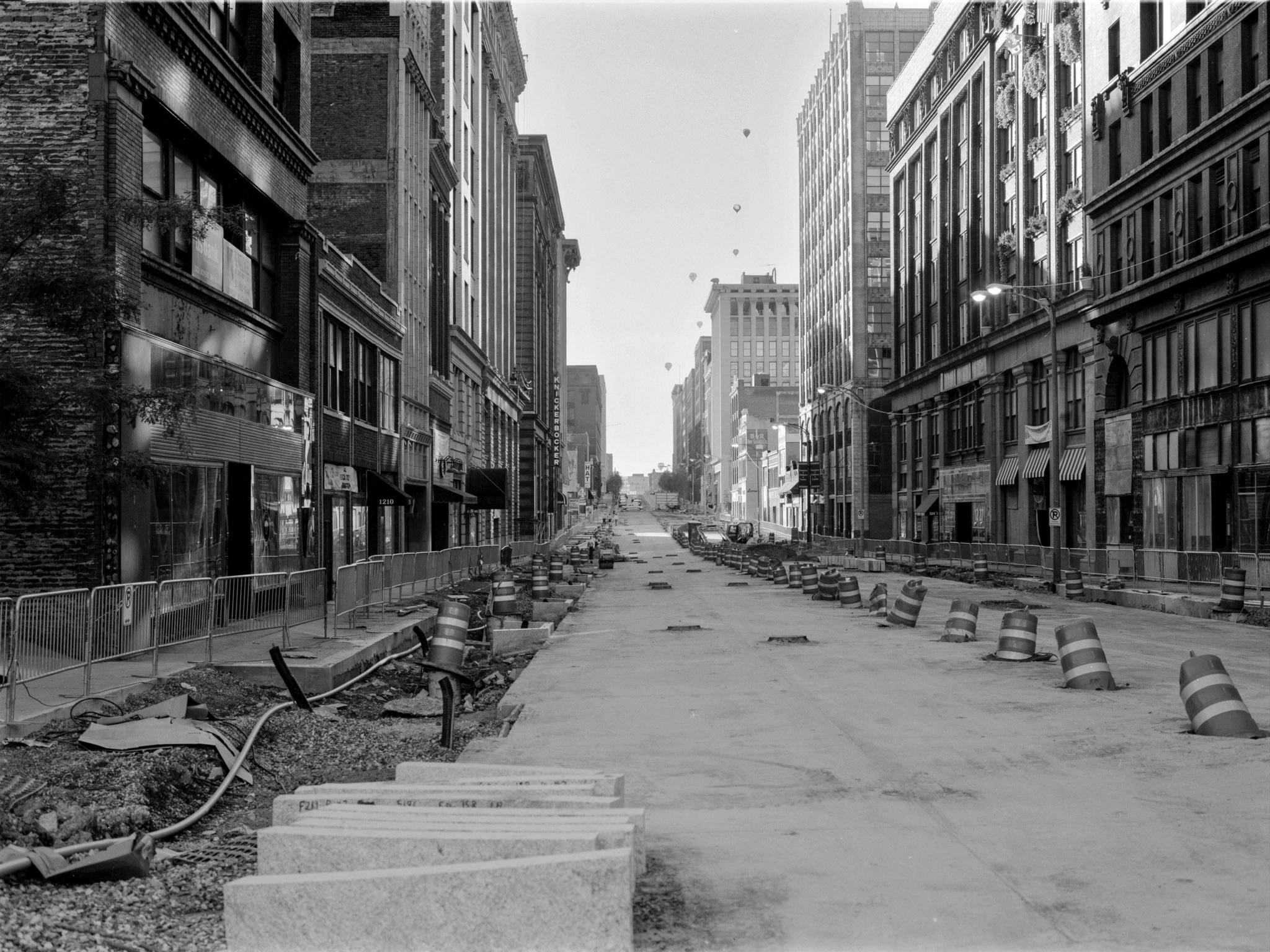
Taken in 2003, this photograph captures a moment of historical and urban significance in St. Louis. In my early years as a photographer, I was drawn to documenting sites and events I believed would carry future historical value. During a photo walk downtown, I found myself exploring the Washington Avenue District as it was beginning its revitalization.
This area held deep personal meaning for me.
During my high school years, I remember purchasing the latest fly hip-hop gear from Gus’s Fashions at the corner of 12th and Washington. Nearby were Marty’s Shoes, Levin’s Clothing Store, Cummel’s Café, and a number of dance clubs that shaped the cultural energy of the district throughout the 1980s and 1990s.
By chance, the annual Forest Park Balloon Race was underway that day, and several hot air balloons drifted into the western sky above the street. I composed multiple frames of the scene, ultimately selecting this image for its balance, composition, and the visual dialogue between the enduring architecture and the fleeting presence of the balloons.
The photograph reflects not only the historic character of the district, but also broader themes of memory, planning, progress, and continuity within the urban landscape.
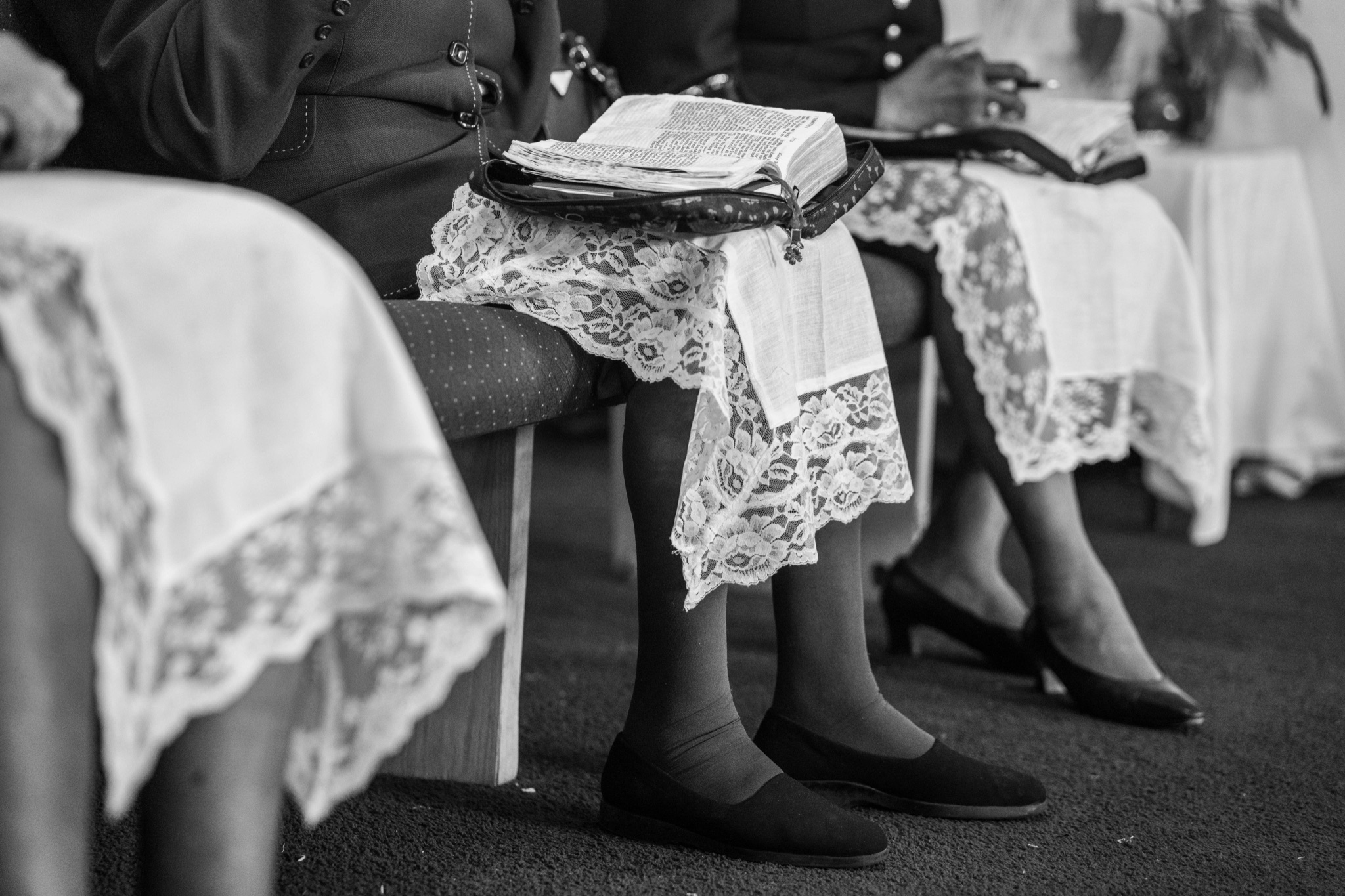
In many African American churches, modesty in dress and posture is both a spiritual and cultural expression. Draping lace over the legs when sitting in a skirt or dress serves as a visual act of modesty, particularly when crossing the legs. It is a gesture rooted in reverence—covering the knees as a sign of respect while in the sanctuary during prayer, song, and communion. Historically, church has been one of the most important public gathering spaces within African American communities, and customs of dress and etiquette evolved to reflect dignity, elegance, and self-respect.
This photograph was made at the Church of Salvation, the first church I photographed as part of a project documenting businesses, church life, and the people who live and gather along Dr. Martin Luther King Drive. From the moment I arrived, the congregation welcomed me with open arms.
On that day, the pastor made a decision to seat the church mothers in a special section—something that had not been done before in this small congregation. The moment felt historic, a quiet acknowledgment of the women whose presence, wisdom, and faith anchor the life of the church.
Before the service began, I asked for permission to photograph the worship. They graciously agreed, allowing me to move freely and document the service as though I were a lifelong member. Their trust transformed the experience from observation to participation.
One moment in particular remains with me. During the service, I was invited to come forward and speak at the microphone—a rare honor for a visitor. Typically, guests are asked only to stand and share their name. That day, I was invited to testify. I spoke about my book project and my hope that this church service would mark the beginning of its success.
This photograph honors that welcome, the traditions embodied by the church mothers, and the dignity carried in even the smallest gestures. It is a record of faith lived through posture, presence, and grace—and of a community that opened its doors and its hearts at the very start of my journey.
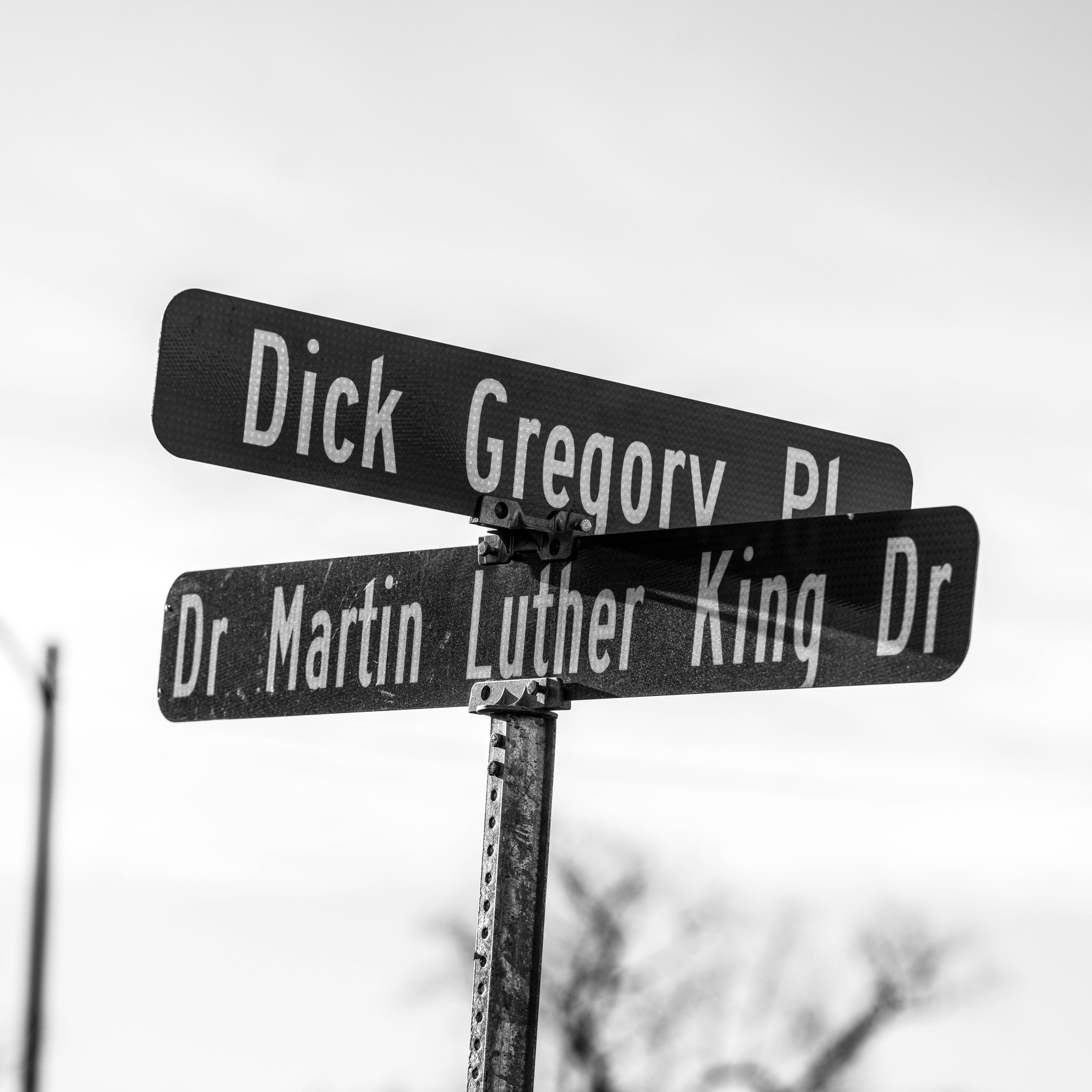
The intersection of Dick Gregory and Dr. Martin Luther King Drive holds both historical and cultural significance in St. Louis. Dr. Martin Luther King Drive itself is a key artery through the city’s predominantly Black neighborhoods, a street long central to commerce, social life, and political activity. Native St. Louisian Dick Gregory, the legendary comedian, activist, and social critic, adds another layer of resonance: Gregory’s life work intertwined humor, creativity, and activism, consistently challenging systems of inequality while inspiring community empowerment.
At this corner sit both the NBC Lounge and Harry’s Barbershop. Still going strong, Harry is the oldest and longest-running proprietor on the entire street. At 86, he has been cutting hair in the same location for over 68 years, serving my grandfather, my father, and has cut my son’s hair as well.
This intersection symbolizes more than a physical location; it is a crossroads of history, memory, and identity. The naming and enduring businesses create a visual and cultural reminder of the power of individual and collective action, the importance of social justice, and the ongoing conversation between past and present. Photographically, capturing this intersection serves as a metaphor for resilience, community pride, and the continuous effort to honor those who fought for progress while shaping the future.
Since this photograph was taken, the May 16th, 2025 tornado tore off the Dick Gregory portion of the street sign, prompting the city to relocate his name to a nearby light pole, effectively separating the two. This event adds another layer to the story of endurance, change, and remembrance at this historic intersection.
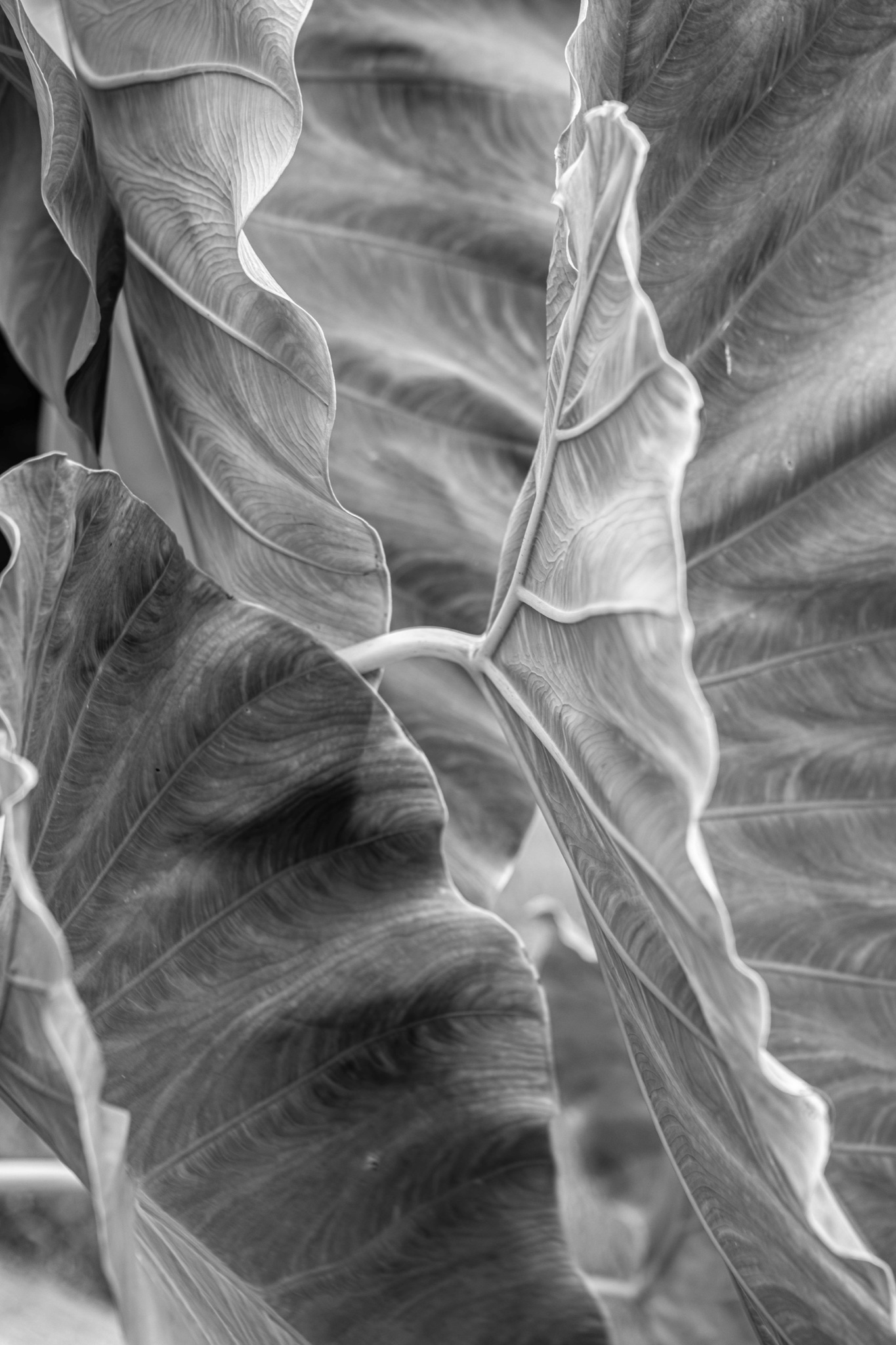
Elephant Ears documents a personal journey with plants that became both a labor of love and a source of joy. In 2016, a dear friend gifted me three elephant ear bulbs, which I planted in the south front yard of my then Benton Park home. Following neighbors’ advice, I dug them up each fall before the ground froze, let them dry, and stored them in brown paper bags in a cool, dark place.
To my delight, each bulb produced multiple “bulb babies,” and the following spring I planted the now twelve bulbs across a larger area of my yard. Over successive years, the original trio grew to six feet, their offspring to two to three feet, and each subsequent planting produced even more bulbs. By mid-summer 2023, those original bulbs had grown to an astounding eight feet tall. Over time, I shared hundreds of bulbs with friends, neighbors, and even strangers I encountered, spreading the growth and vitality of these plants beyond my own garden.
In the middle of that summer, I was preparing to sell my house and did not have the heart to cut down the elephant ear plants. To preserve them symbolically, I photographed them, allowing their presence to “move” with me.” I wanted to also photograph them in an abstract way to create interest. This image celebrates resilience, propagation, and the enduring connection between life, memory, and place.
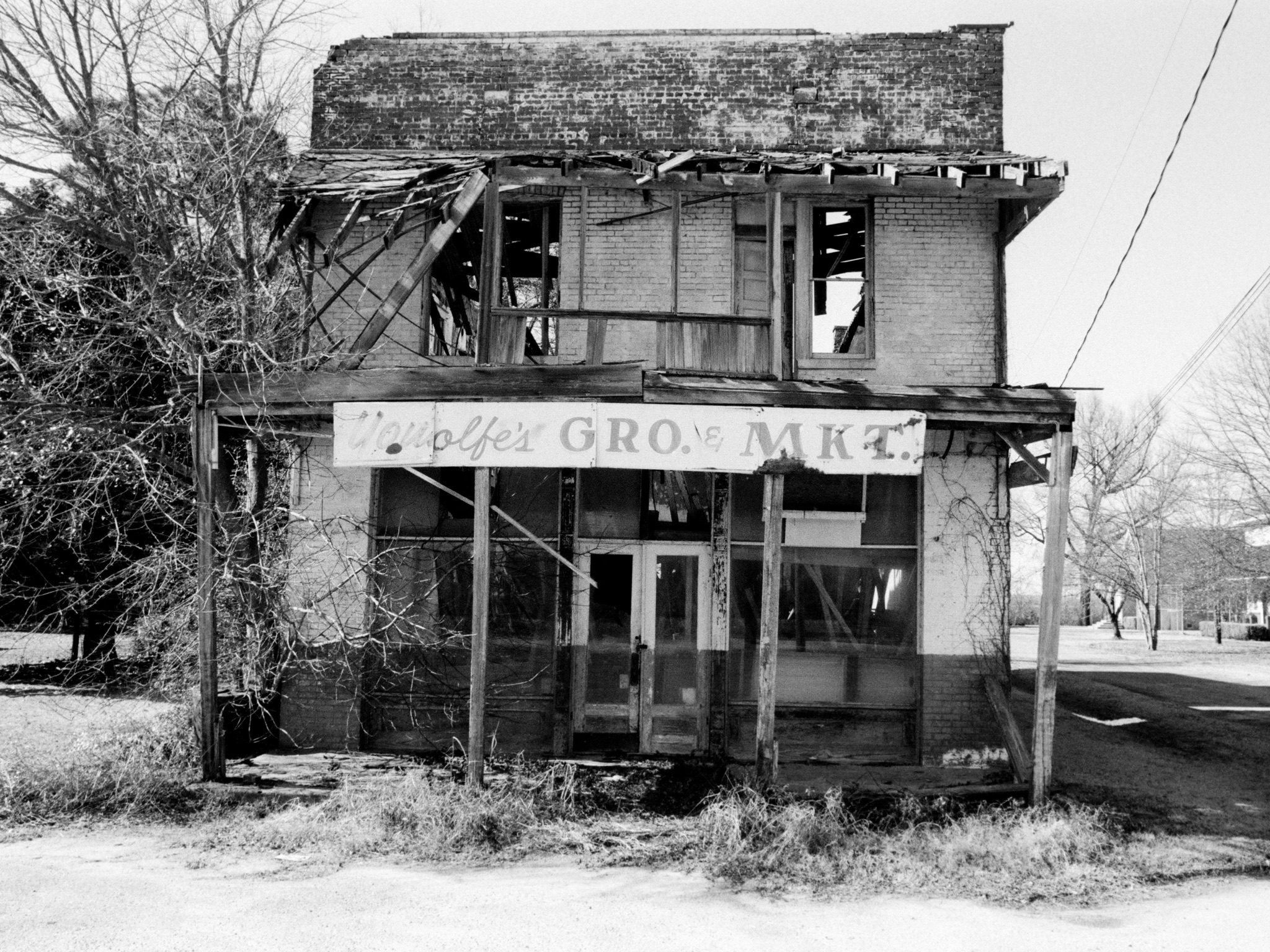
Emmett Till’s Last Purchase was photographed on January 26, 2003, in Money, Mississippi. The image depicts Bryant’s Grocery and Meat Market, the site where, on August 24, 1955, fourteen-year-old Emmett Till allegedly whistled at Carolyn Bryant.
Three days later, her husband Roy Bryant and his half-brother J.W. Milam abducted Till from the home of his great-uncle, Mose Wright. He was brutally tortured—reportedly behind this very store—shot, and his body was tied with barbed wire to a cotton gin fan before being submerged in the Tallahatchie River.
In 2011, the Mississippi Development Authority announced the creation of the Mississippi Freedom Trail, a collection of twenty-five sites recognized for their profound significance in civil rights history. Tourism officials identified this location as the most important of all the sites commemorated on the trail.
From the perspective of the Mississippi Development Authority, the murder of Emmett Till—and the public reckoning sparked by his open-casket funeral—marks the genesis of the modern civil rights movement. Just four months later, Rosa Parks would refuse to give up her seat, and Reverend Dr. Martin Luther King Jr. would rise to lead a movement that reshaped the nation.
This photograph stands not only as a document of place, but as a witness to origin—where terror was meant to silence, yet history began to speak.
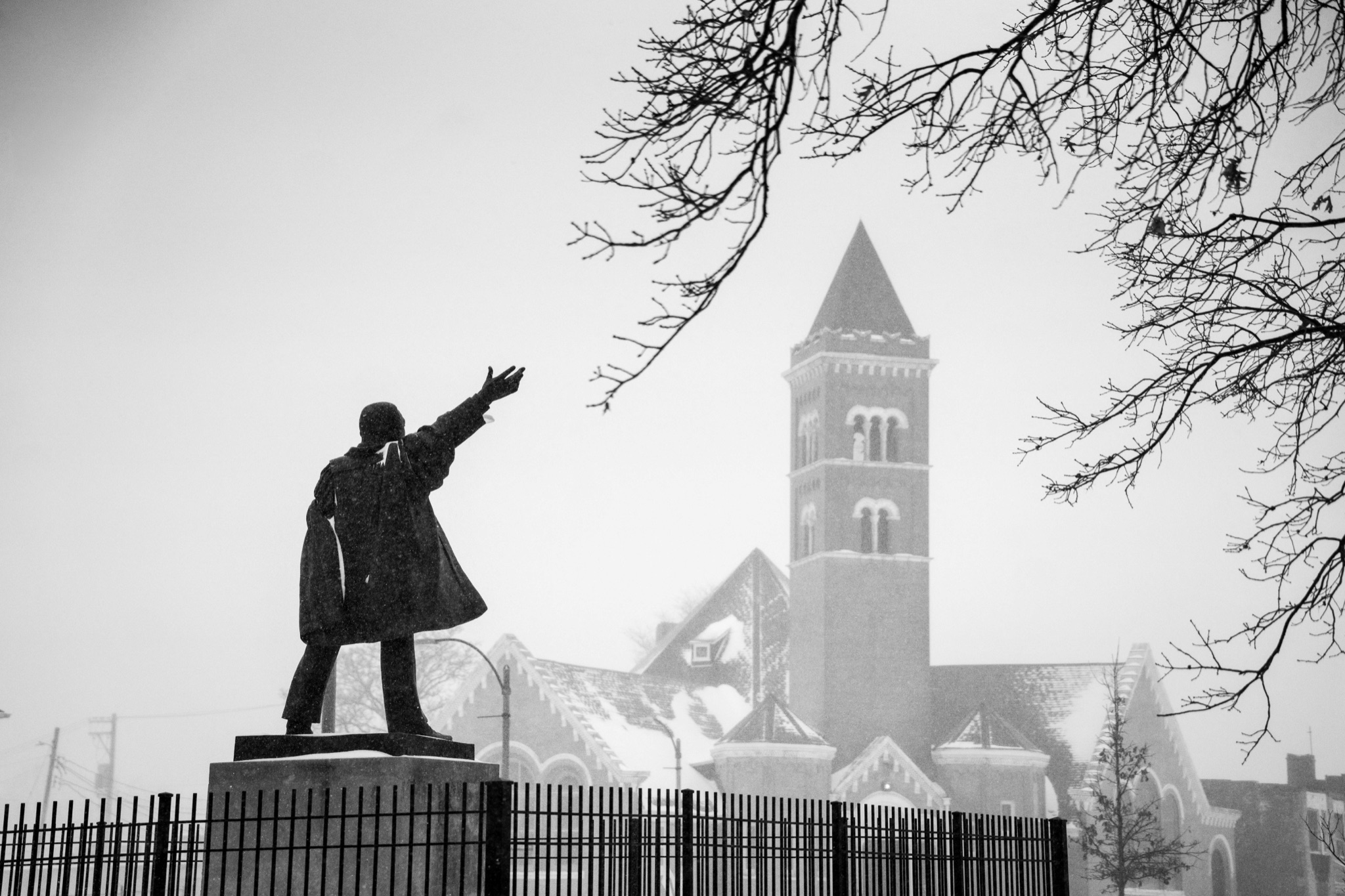
This photograph, MLK and Centennial Baptist Church, was taken on January 5th, 2024, during the first snowfall of the year. Every year, when the season’s first snow arrives, I make it a point to go out and photograph. There is something about that initial quieting of the city—the way sound is softened and time seems briefly suspended—that feels worth preserving.
The subject of this photograph was one I had been observing for quite some time. During frequent walks and trips through the park, I had photographed this scene casually with my phone, sensing there was something there I hadn’t yet fully captured. On this particular day, however, I had my professional camera with me. I had set out with intention, beginning work on a series centered on Martin Luther King Jr., Martin Luther King Drive, and the physical spaces that quietly carry his name and legacy. Centennial Baptist Church stood as one of those places—rooted, dignified, and woven into the daily life of the neighborhood.
The snowfall reframed the scene. The church, the street, and the surrounding trees felt momentarily unified, softened by white and held in a kind of reverence. The photograph became less about architecture or documentation and more about presence—about a neighborhood, a history, and a stillness that felt earned.
At the time, I had no way of knowing that just five months later, a tornado would move through the area and devastate the neighborhood. Mature trees were torn down. Centennial Baptist Church was destroyed. The physical landscape captured in this image no longer exists as it did in that moment.
This photograph now holds a weight I could not have anticipated. It is not only a reflection on history and place, but a record of something permanently lost. What was once simply a photograph taken during the first snow of the year has become a final witness—a sight that will never be seen again.
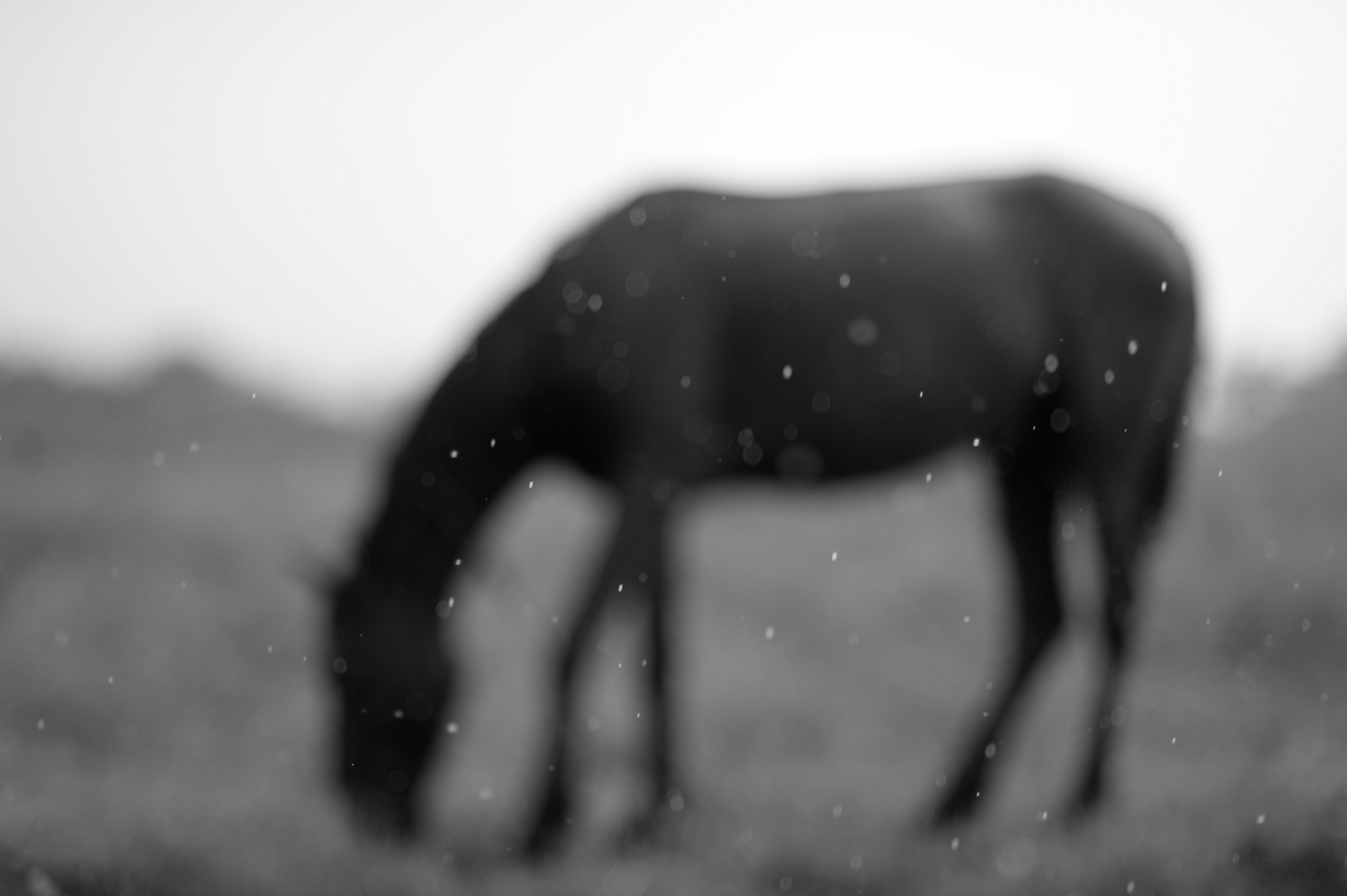
Horse in Havana was captured in 2013 on a dream trip to Cuba with a group of 30 photographers, led by master lensman Zach Arias. On the fourth day, we visited a Cuban farm approximately 100 miles outside Havana. As we arrived, we encountered a local man hand-rolling cigars, and we gathered to observe him while Zach instructed us on the next shoot.
Suddenly, rain began to fall heavily, and we waited for it to pass. Zach’s wife, Megan, ran into the downpour to photograph a horse grazing in the grass. When she returned, she reassured me that our cameras were waterproof. Trusting her, I ventured into the field despite the rain.
The horse remained calm, undisturbed by my presence, and continued to eat peacefully. In that moment, I attuned myself to the horse’s quiet frequency, embracing stillness and patience. I lowered to one knee, composed the frame deliberately, and captured a single image that reflects this harmony and serenity.
This photograph embodies the realization of a dream, the patience to wait, and the conscious act of matching one’s own energy to the presence before the lens.
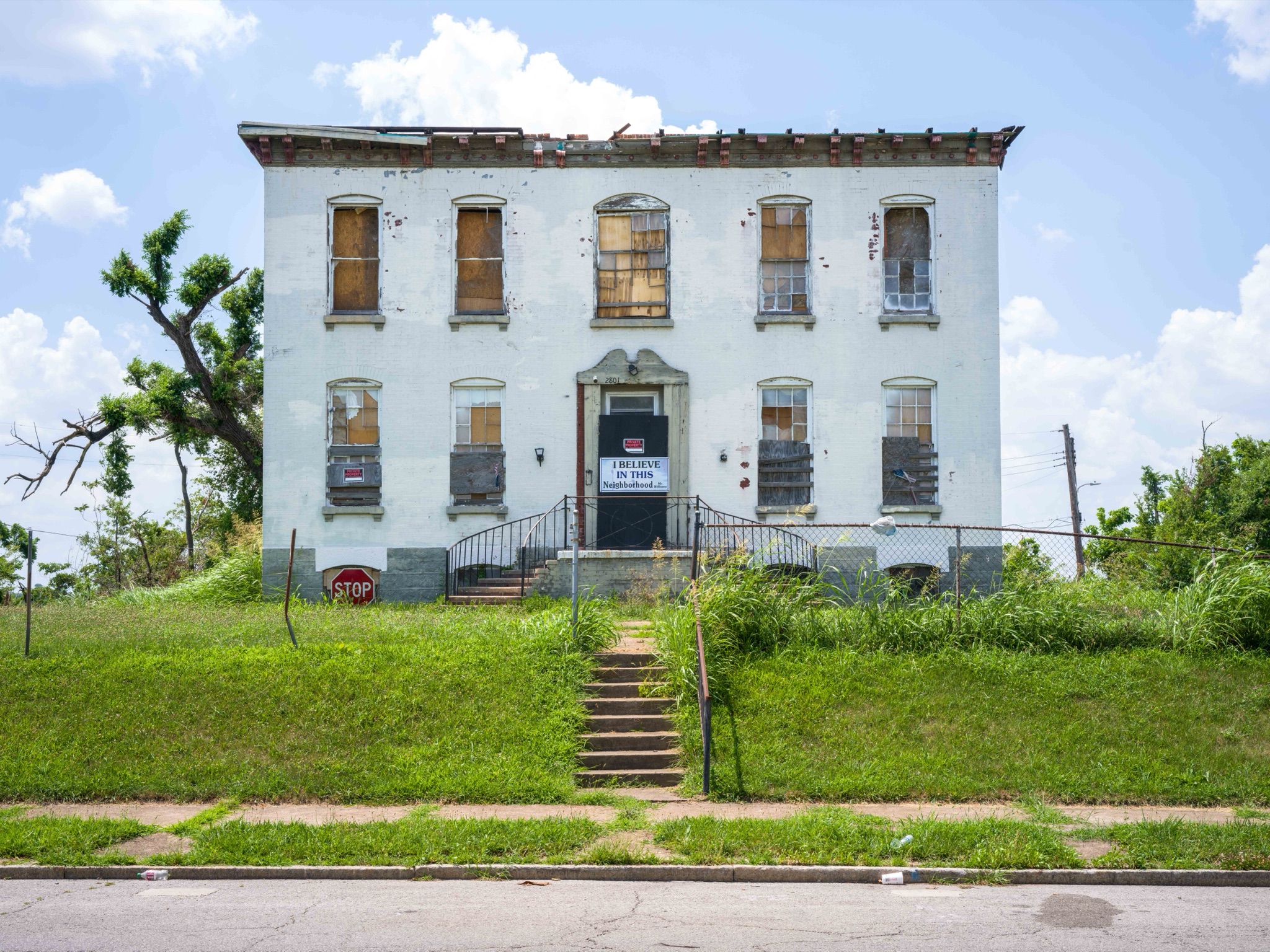
I Believe in This Neighborhood depicts a once-opulent home in the historic Ville neighborhood of St. Louis. I was drawn to photograph this house because it is one of the few buildings that retained its original character. There is a quiet resilience in its structure, reflecting both the fragility and endurance of this community.
Despite the devastation surrounding it, the house stands as a symbol of perseverance and optimism, thanks to the individual who placed the hopeful signage on its front door. The photograph captures a moment of calm and hope, emphasizing the strength found in continuity, care, and belief in the future of a community
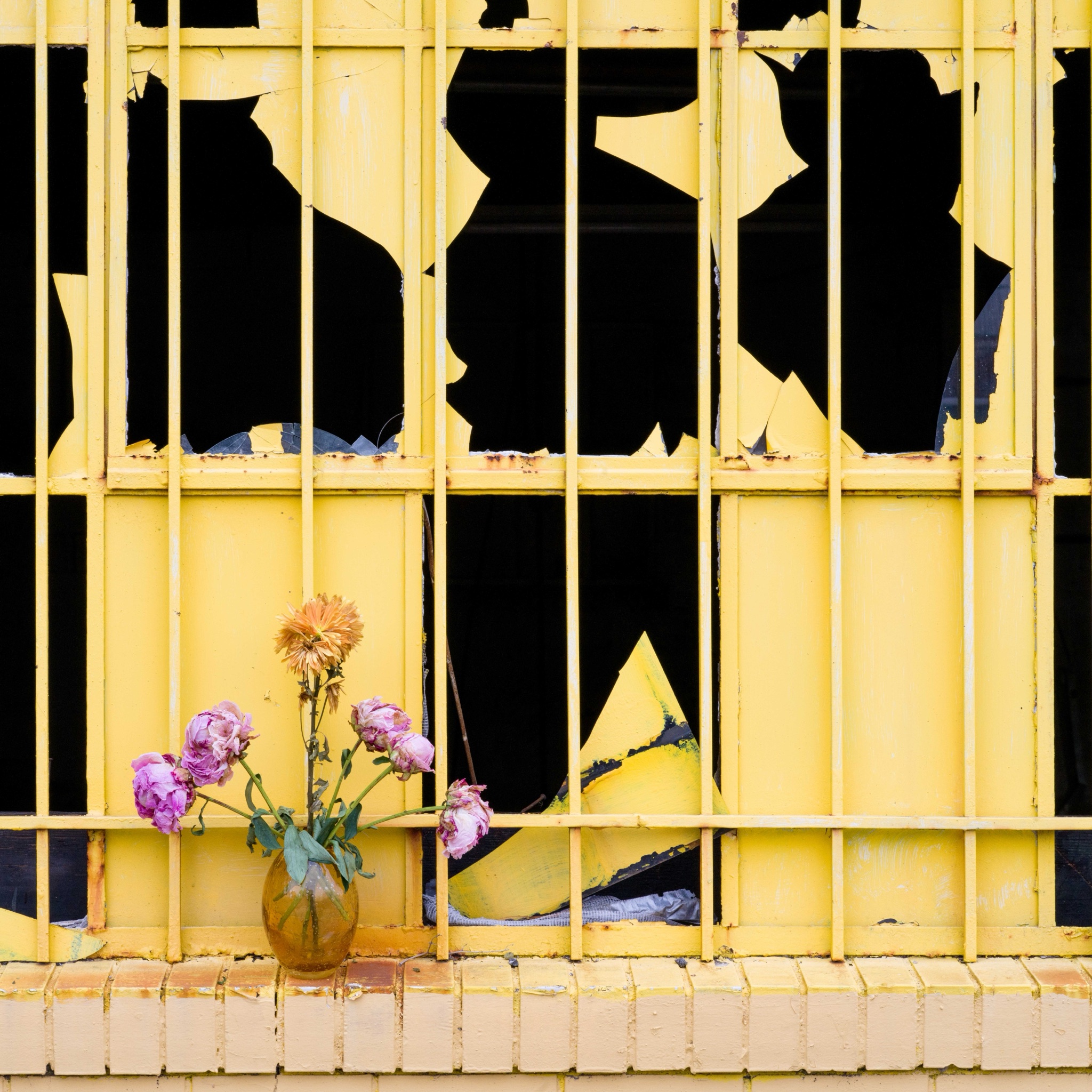
I would like to call it Beauty captures a personal journey on Newberry Terrace, a street where my mother and many family members grew up. Every few years, I drive this stretch to reminisce, honoring those who are no longer with us and keeping their presence alive in my heart. The act of revisiting this street allows me to see life lessons and memories with a fresh, current perspective.
On one particular visit, I was drawn to a bright yellow, abandoned gas station and car repair shop at the end of the block. My imagination filled the scene with visions of my mother walking past in various outfits on her way to grade school and later to Sumner High School. She would often remind us how privileged we were to have rides to school in our own childhood years. I knew I wanted to one day photograph that building in some way.
Two weeks after Thanksgiving, the flowers on our dining room table were beginning to die and fade. My wife moved them toward the backdoor in the kitchen, signaling it was time to throw them away. They still looked beautiful to me, and I wanted to keep them or perhaps press them in a book as my mother sometimes did to preserve them. The idea came to me to preserve them my own unique way. I took the purple flowers to the end of her old street to photograph them against that yellow building, which is also complementary color of the flowers. I placed them on the windowsill and composed them against the broken glass — surely the aftermath of storms, hurled rocks, and time — Like the flowers still beautiful.
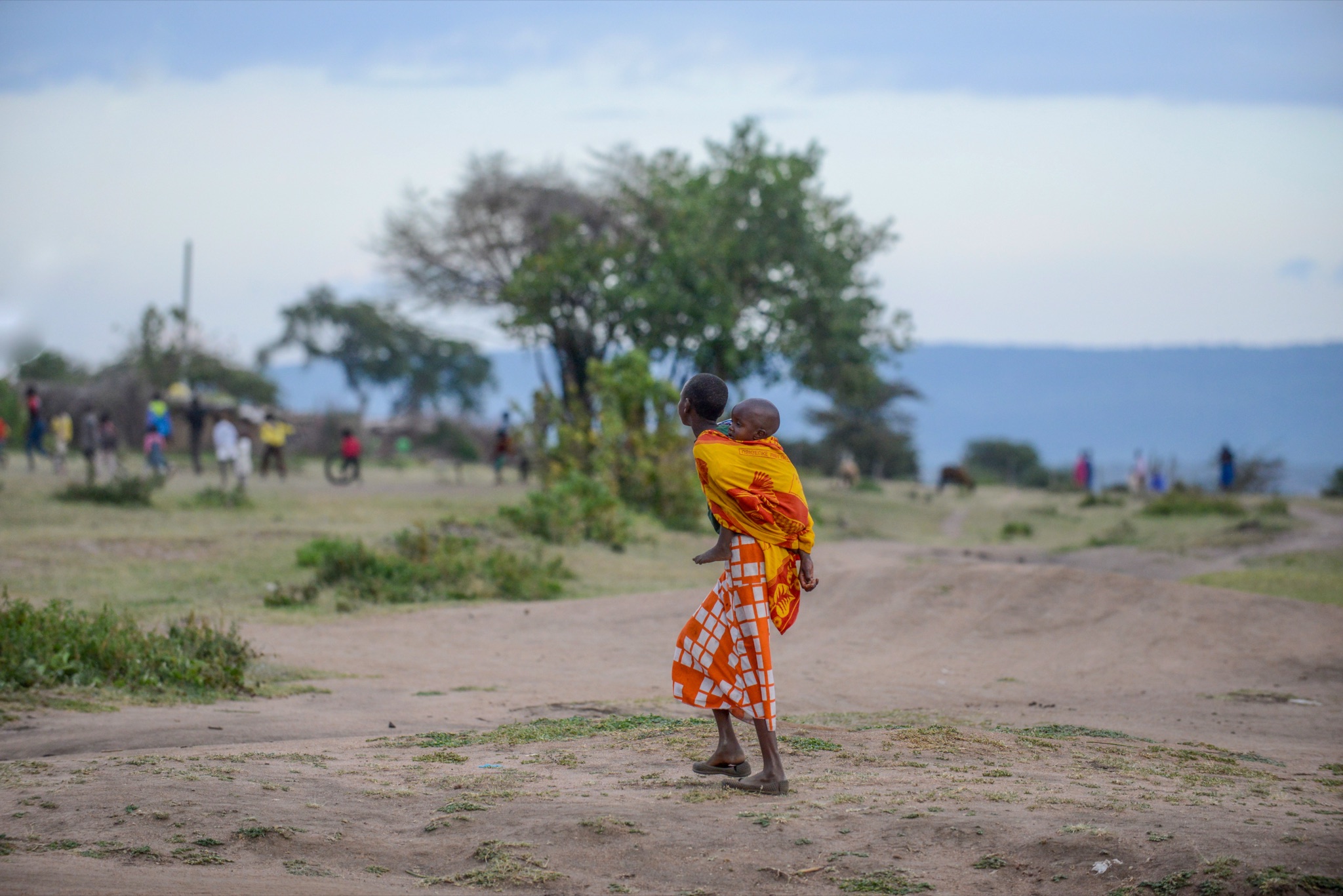
I Got You was taken in the Maasai Mara, approximately 150 miles west of Nairobi, Kenya. During a stop to purchase local gifts, I observed the lively sounds and activities of children at play in a nearby village.
At one moment, a child walked in front of me carrying what I assumed to be a younger sibling toward the other children. The confident stride and subtle body language — with one hand held behind their back — conveyed care, assurance, and the quiet responsibility of guiding another. The scene reflects trust, familial connection, and the unspoken ways children look after one another.
I was inspired to print this image from the hundreds I took on that trip because it reminded me of a fond memory my father often recites: his older brother carrying him around a city block. Seventy years later, he shares that story as if he were still riding on his shoulders today.
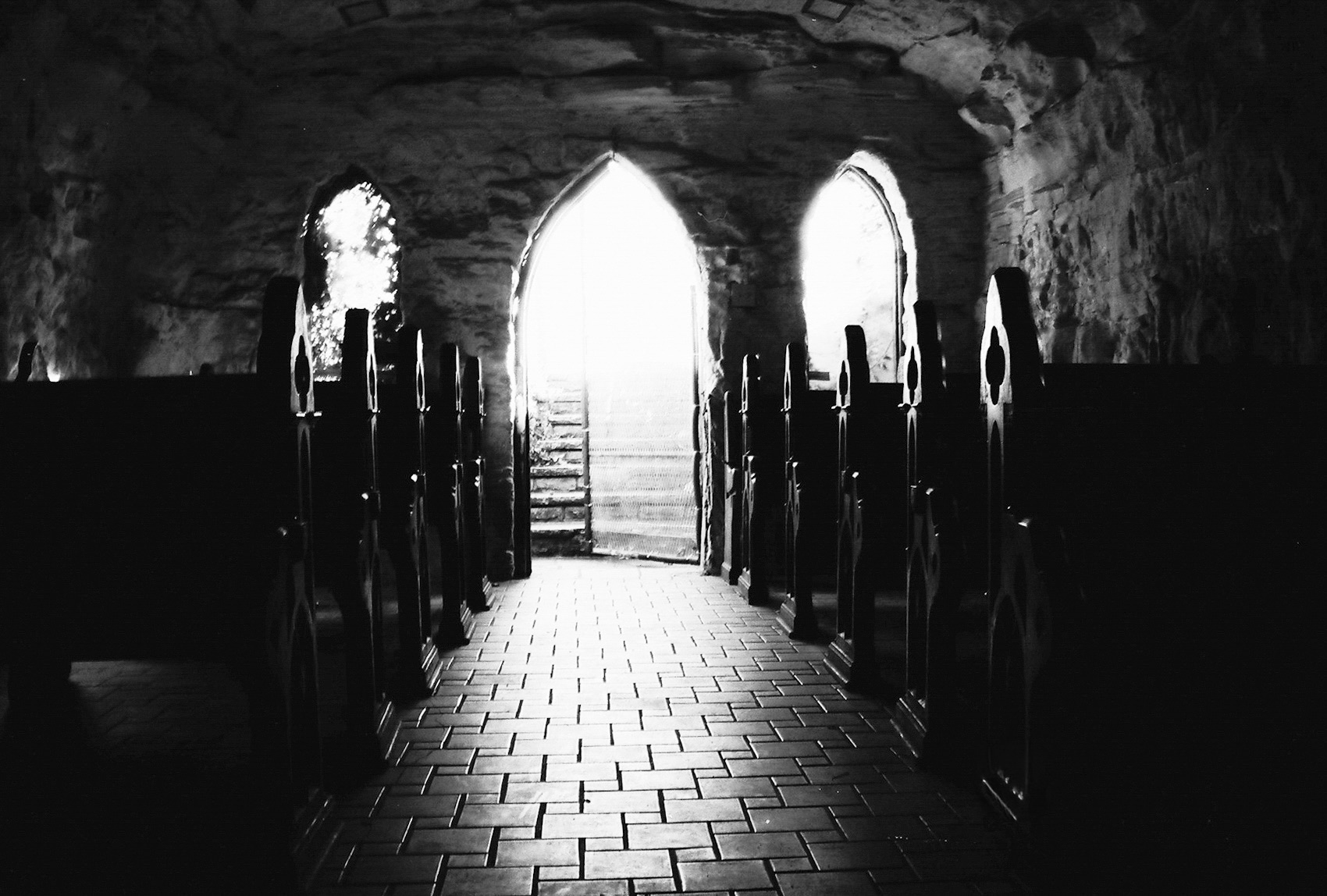
The Manresa Retreat House in Kinloch, Missouri—commonly referred to as Manresa Cave—was a Catholic retreat site connected with Holy Angels Catholic Church on Scott Avenue. Opened in 1941, it holds historical significance as the first retreat house in the world for Black Catholic laymen, offering spiritual retreats and community gatherings. The grounds included a cave chapel designed to replicate the famous cave in Manresa, Spain, where St. Ignatius of Loyola prayed and composed the Spiritual Exercises. At the Kinloch site, approximately four to five feet of the cave’s roof protruded above ground, covered with natural materials such as sponge rock, shrubs, and flowers. Retreats typically ran from Thursday evening through Sunday morning, including meals and lodging, creating a space of reflection, community, and spiritual renewal.
This photograph of the Manresa Cave carries profound personal significance—it represents the first professional image I ever took and sold. Captured in the fall of 2001, the photograph was part of a fundraising effort organized by the church, which invited local artists to contribute work and share a portion of the proceeds to support the care and maintenance of the church. I was asked to photograph the retreat house and offer the image for sale at the local fundraising event.
Creating this photograph and having it so well received by the church and the artists of my fathers art collective, Creative Coalition, marked a turning point in my life. The success of this single image gave me the confidence to pursue photography professionally, to believe that I could support myself, and to continue documenting the spaces, communities, and histories that move me. Beyond its historical and cultural context, the Manresa Cave photograph is a reminder of opportunity, inspiration, and the moment when passion and possibility aligned.
This image now holds dual significance: it is both a record of a sacred, historic site and a testament to the beginning of my journey as a professional photographer.
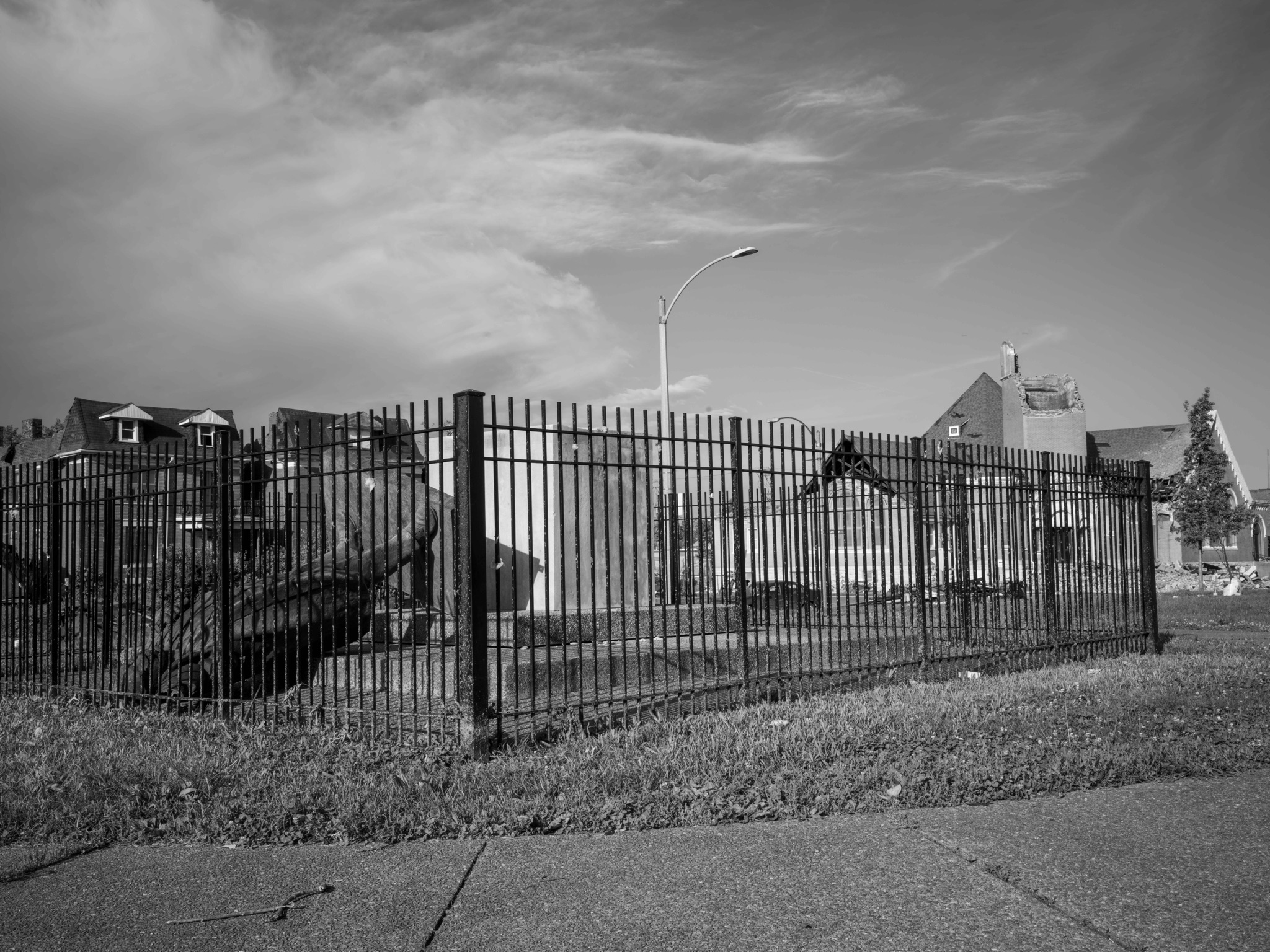
On the afternoon of May 16, 2025, an intense and destructive tornado carved a path more than twenty miles long through the urban heart of Greater St. Louis. Neighborhoods such as Greater Ville and Fountain Park bore the brunt of the storm, as entire blocks were transformed in minutes from familiar streetscapes into fields of debris.
At the urging of a friend, I grabbed my bike and camera and took to the streets of my Kingsway East neighborhood and Fountain Park. I wasn’t in the mood to take photographs—the scene was heavy, unsettling, and deeply depressing—but my friend reminded me that it is a photographer’s duty to report and document what is happening, and to consider the emotional weight war photographers carry every time they lift their cameras. With that in mind, I took to the streets.
The tornado had taken down several trees on my block, and along adjoining Euclid Avenue power lines were strewn everywhere. Still, I felt compelled to make my way to Fountain Park. I had heard it was hit hard, and I wanted to check on a friend who lived nearby.
As I approached the park, it was unrecognizable. Every mature tree was down. Several of the beautiful historic homes surrounding the park were badly damaged. To the west, a familiar and grounding scene had vanished: the Dr. Martin Luther King Jr. statue facing Centennial Baptist Church was no longer standing. The statue had fallen backward, its right outstretched arm broken off. The tall church steeple it once faced had collapsed inward on itself.
I took a few photographs and then sat there, trying to grasp some meaning behind it all.
I couldn’t.
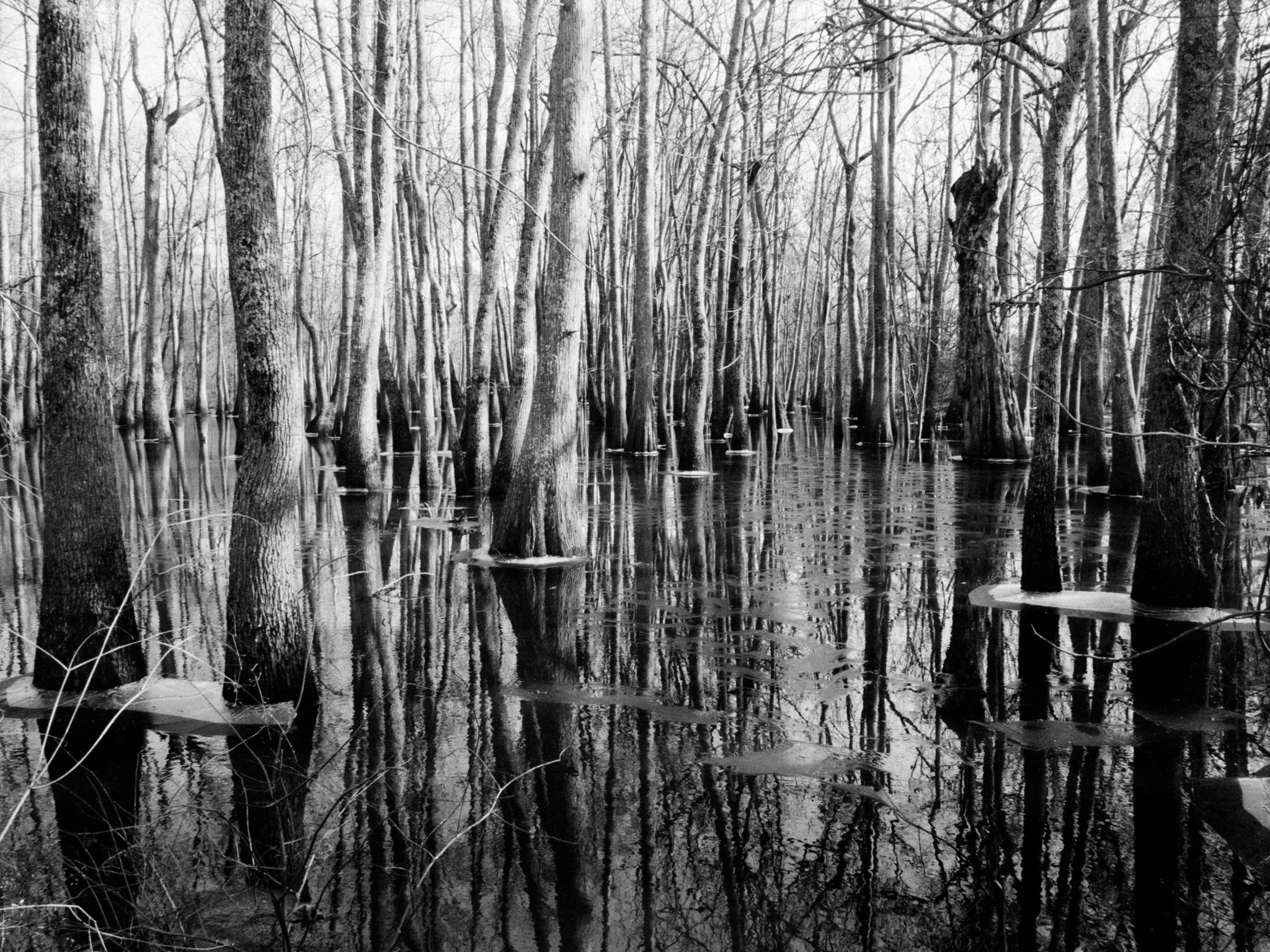
In January of 2003, my father, my brother, and I traveled south to Money, Mississippi, to see with our own eyes the cotton fields of the surrounding area and to visit the historic store where our distant cousin, Emmett Till, made the fateful decision to enter Bryant’s Grocery Store August 24th, 1955.
Using MapQuest, we were directed to veer off the main highway and take a series of dirt back roads to save time. As the sun began to decline, and after passing several Confederate flags proudly displayed on nearby homes, an unspoken tension settled in the car. We were eager to reach our destination.A few minutes later entered a wooded area. To our right, I noticed a swamp with a small clearing and asked my father, who was driving, to stop. He replied, “Man, we have to keep going—it’s going to get dark out here soon.”
Further down the road, a bridge was out, forcing us to turn around and backtrack past the swamp. I asked once again if we could stop, this time promising I would be quick. Dad agreed. I jumped out of the car and took three shots on film, carefully adjusting the horizon line with each frame to introduce as much compositional variation as possible.
Days later, while processing the film in the darkroom, one image emerged as the strongest—compositionally sound and perfectly exposed to my liking. I printed it on large, professional-grade rag paper. Not long after, I sold that print for a whopping $300! Great profit for that time.
After the patron left the studio, my father looked at me and said, “Congratulations, son. You are now a professional photographer.”
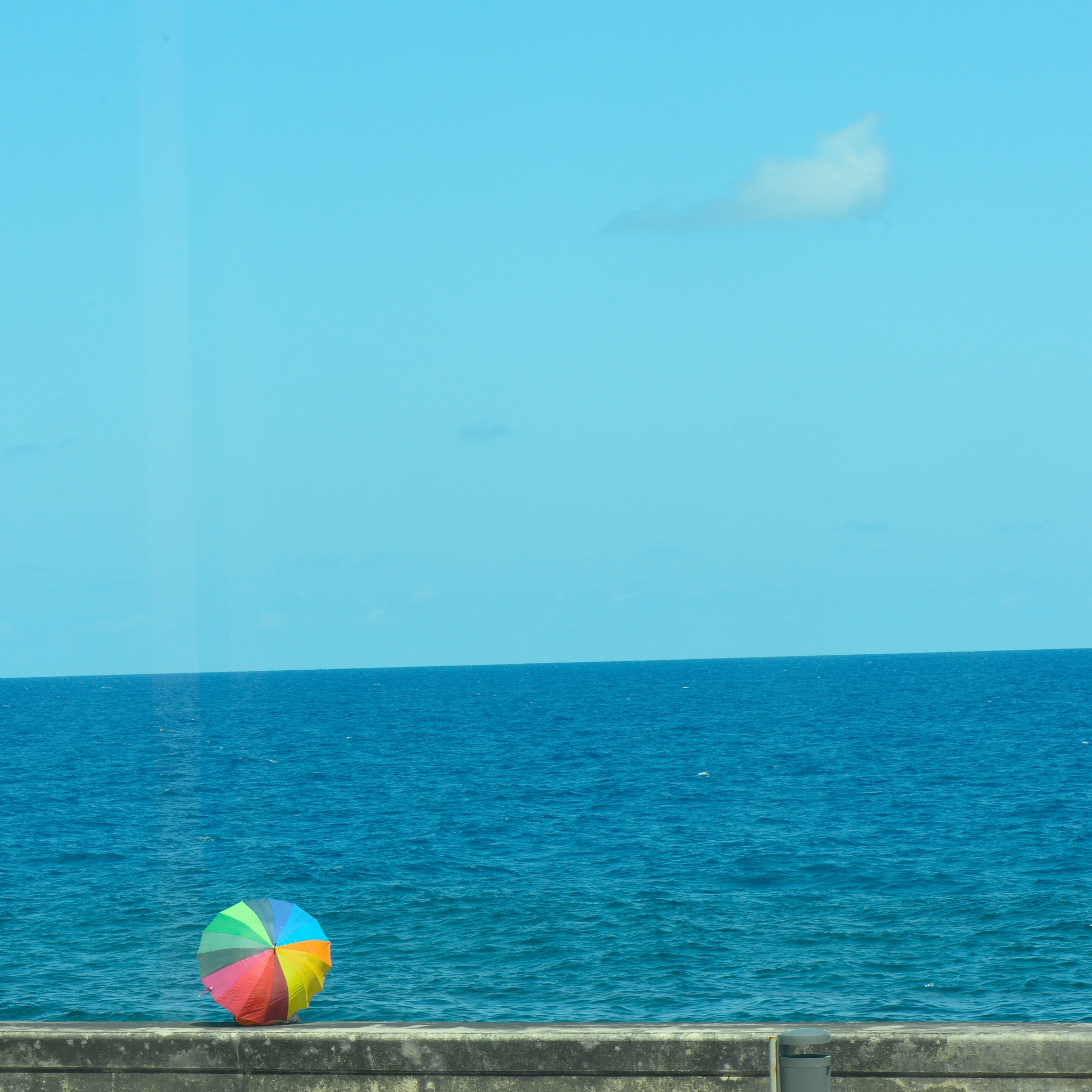
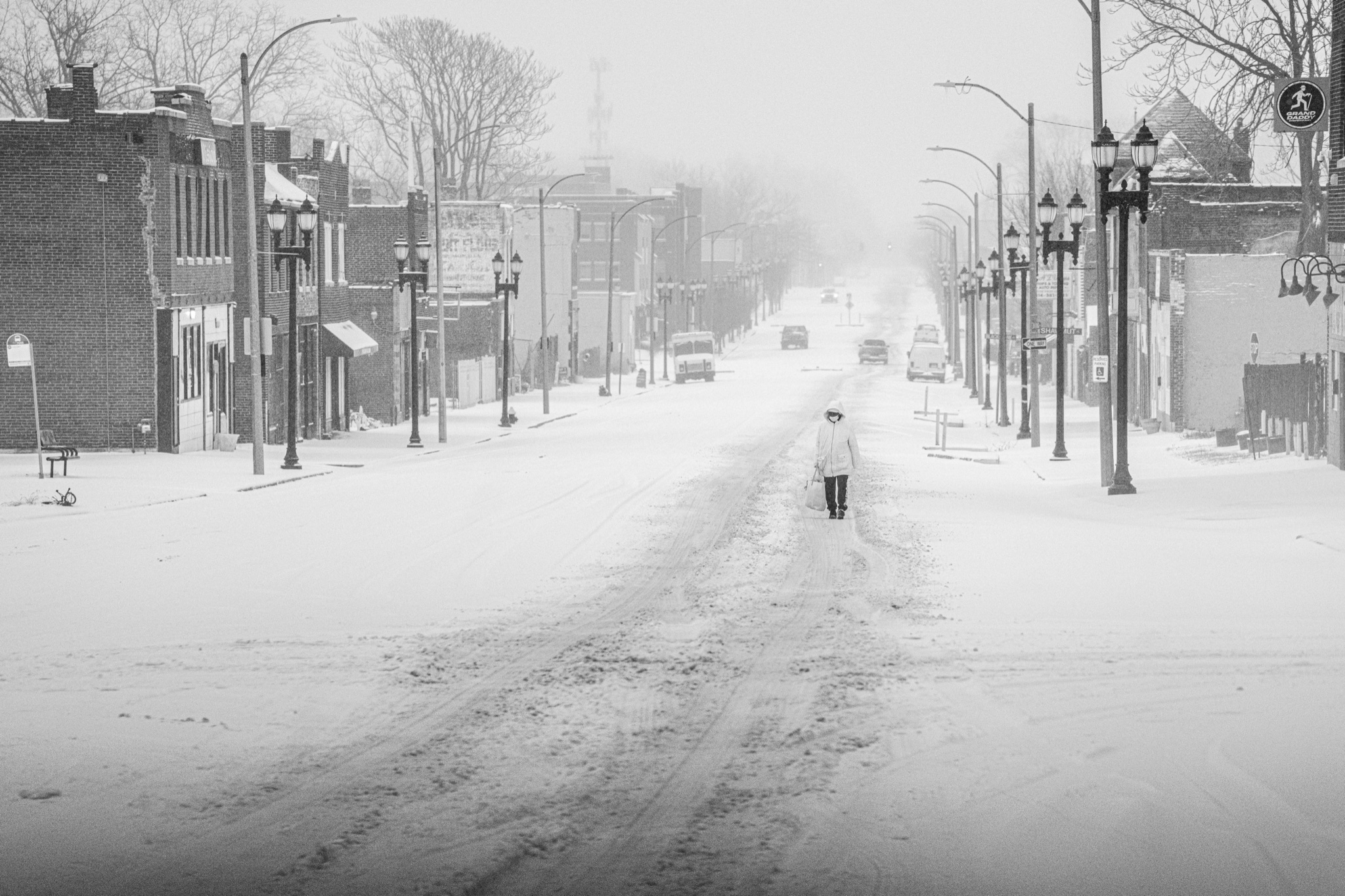
This photograph is part of a series of images created for an upcoming book project documenting the storefront churches and daily life along Dr. Martin Luther King Drive in St. Louis. Taken on January 5, 2025, it was one of the first images captured during the project. On that day, I planned to travel eastbound along the 53 blocks from Wellston toward downtown, capturing scenes that reflected the rhythm and character of the street.
As I approached Goodfellow, I noticed a lone figure walking along the tire tracks in the snow. Initially, I considered stepping out of the car to photograph them, but decided against it to avoid startling the person. Instead, I captured the image from inside my vehicle through tinted windows, which resulted in a vignette-like effect that enhanced the composition.
What drew me to this moment was the energy of resilience — the quiet determination of the individual moving through the cold and snow. I’m not sure where they were leaving or headed, but you could feel they were determined to get there.
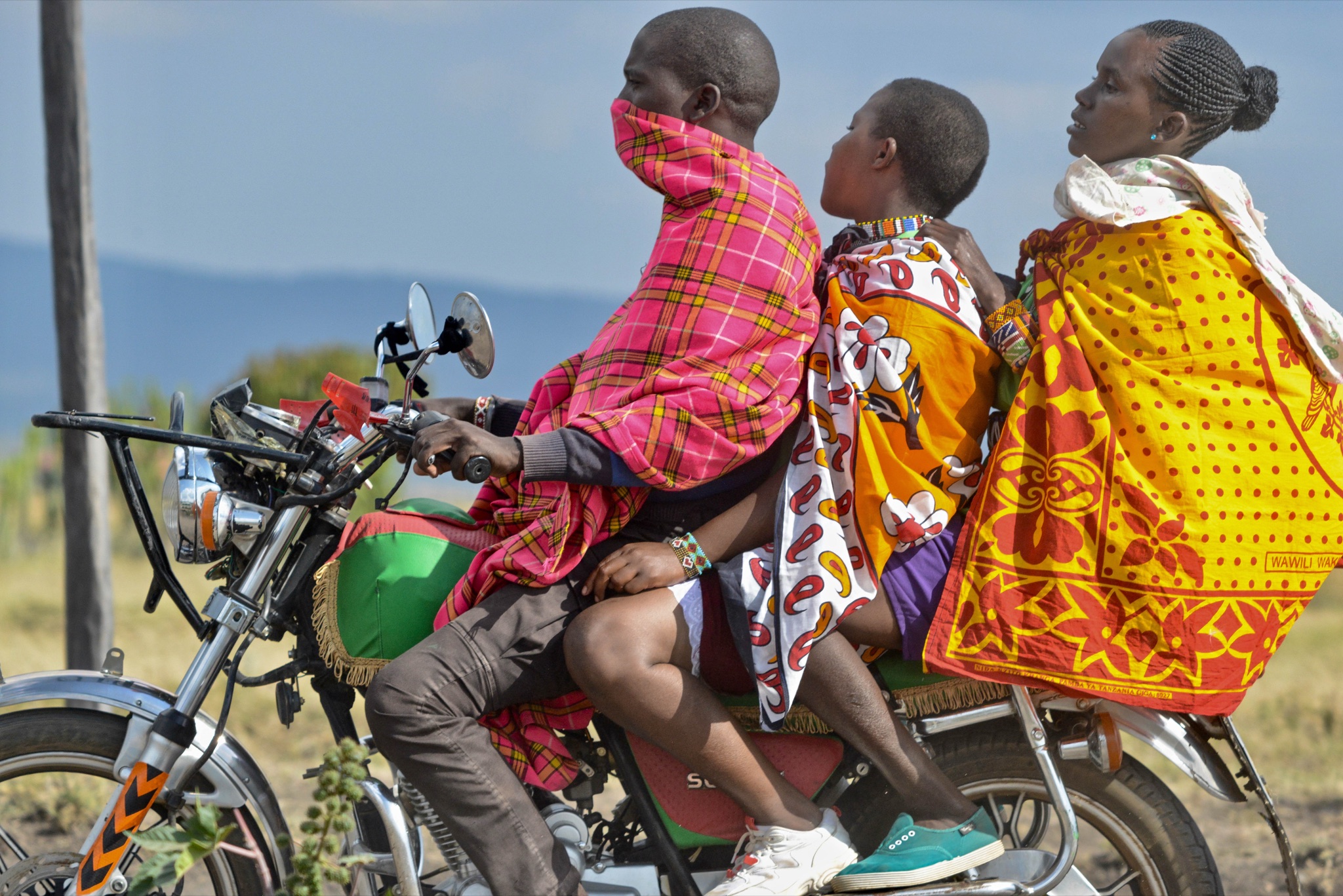
Road to Maasai Mara was photographed in September 2019, approximately 100 miles outside Nairobi, Kenya, during my third international group workshop, which included six participants.
While traveling in a large safari van, I documented various scenes that caught my attention along the open road. About an hour into the trip, while traveling at over 60 mph, I noticed a motorcycle blazing with color in the distance. I took three or four rapid bursts on my camera, successfully capturing three occupants on the motorcycle traveling in the opposite direction — a challenging and rare photographic feat.
This photograph became my personal favorite of the entire trip. So much so, I jokingly remarked that “no other photographs the remaining five days need be taken.” The image captures the spontaneity, energy, and unexpected moments that define travel and observation, celebrating both technical skill and the joy of discovery on the open road.
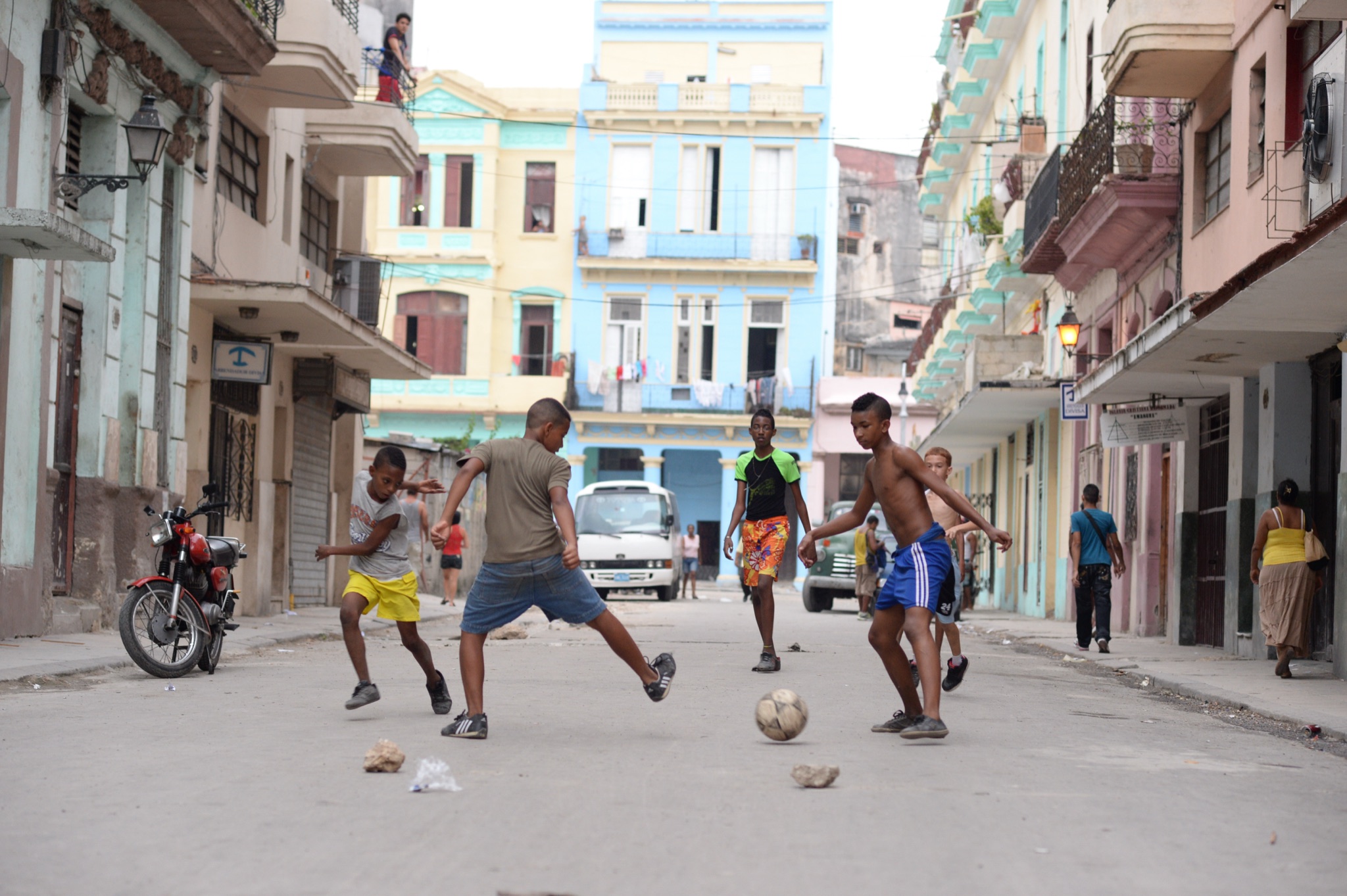
Shirts and Skins was photographed in the streets of Havana, Cuba, during a period when Americans could only travel to the country through authorized “people-to-people” workshops or mission programs. The trip, guided by renowned photographer Zack Arias, included 30 participants.
During one of only three personal breaks over the eight-day visit, I captured this fleeting street scene a few blocks from Parque Central, one of Havana’s most iconic public spaces. This moment was shared with New York photographer Adam Lerner, who also witnessed the scene.
One of the recurring themes of my walks through Havana was documenting moments that echoed memories of my own youth. Growing up in the 1970s and 1980s, informal soccer games using rocks and found objects as goals were common, with teams distinguished as “shirts versus no shirts.” Today, traditional street games like jacks, double Dutch, and informal races are increasingly rare. This photograph reflects a vanishing form of neighborhood play and captures the enduring spirit of childhood imagination and community in urban spaces.
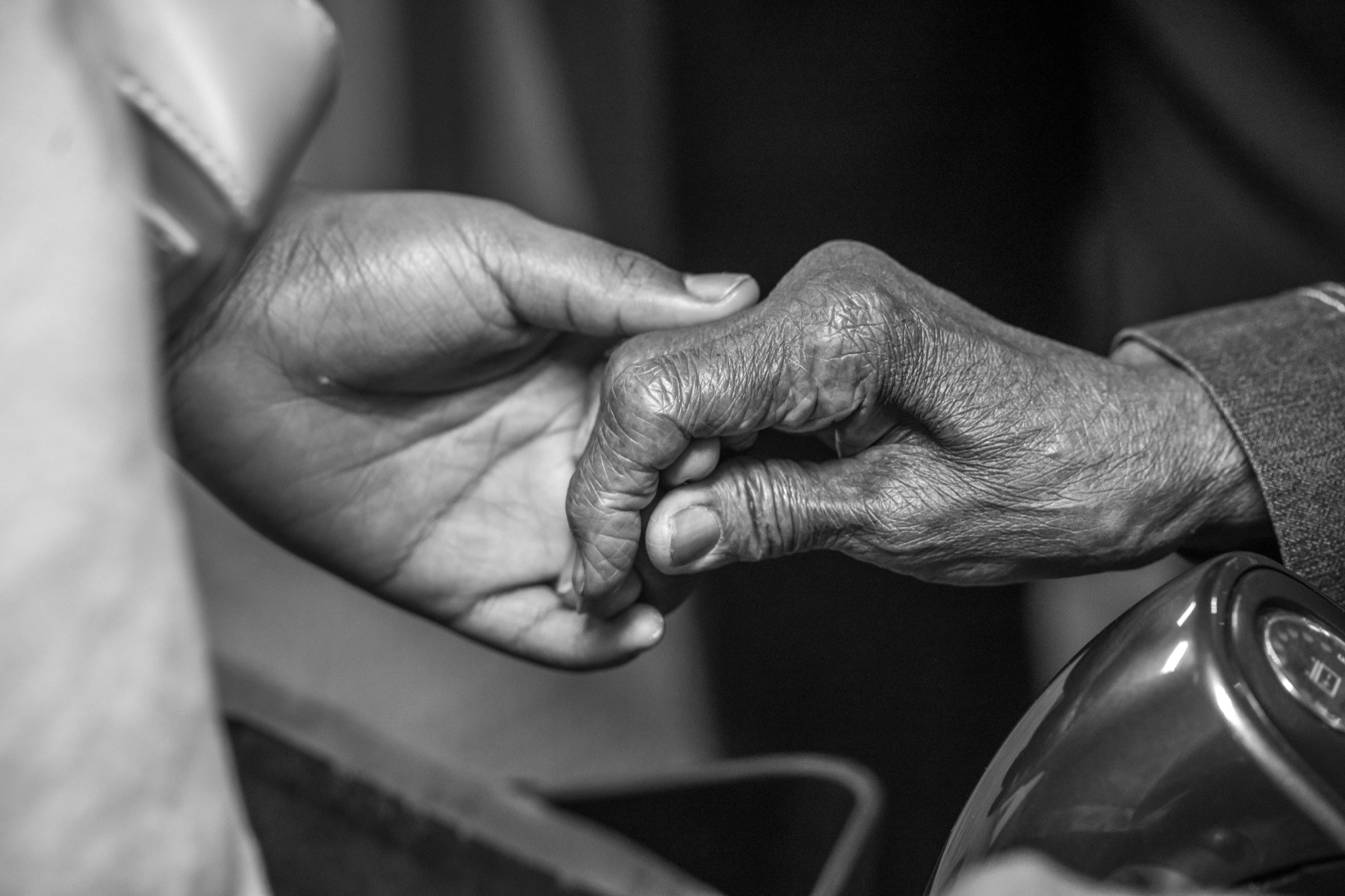
This photograph, Sister Pray for Me, was taken at End Times Church in St. Louis, Missouri, near the corner of Dr. Martin Luther King Boulevard and Marcus Avenue. It captures the Pastor in a moment of prayer over a congregant—a gesture of guidance, care, and spiritual connection that resonates deeply within the church community.
What drew me to create this image was the intimacy and weight of the act itself. I am personally moved by the memory of older individuals taking the time to reach out, grasp my hand, and speak with intent. There is a certain authority and tenderness in that gesture, and witnessing it in the sacred setting of a church made it especially powerful.
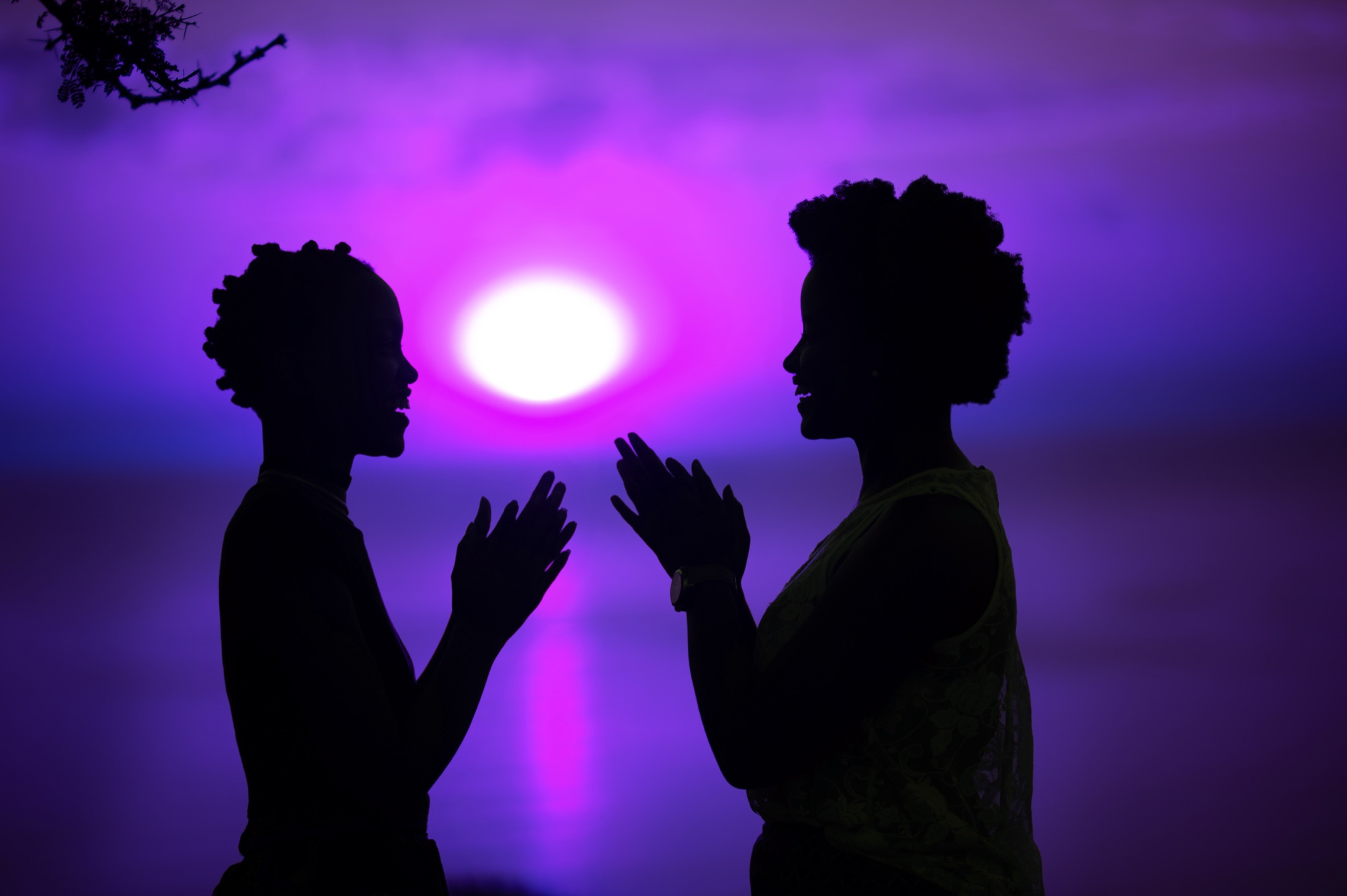
Sister was taken on Signal Hill during my first trip to Cape Town, South Africa. This photograph encapsulates the joy shared between two young women and the feeling I experienced while capturing the moment. I had the honor of meeting them just two days prior, a meeting shaped by a series of events that could only be described as kismet.
Although they were residents of Cape Town, this was their first visit to the top of Signal Hill, and they were delighted to have a photoshoot there. As the sun declined, I chose a silhouette composition to highlight their African hairstyles and vivid expressions. I guided them to face one another and play a hand-slapping game, influenced by The Color Purple by Alice Walker. In the novel, when Celie and her sister Nettie part ways, they play a simple hand-slapping game—a playful, affectionate ritual that symbolizes their bond and the bittersweet nature of saying goodbye.
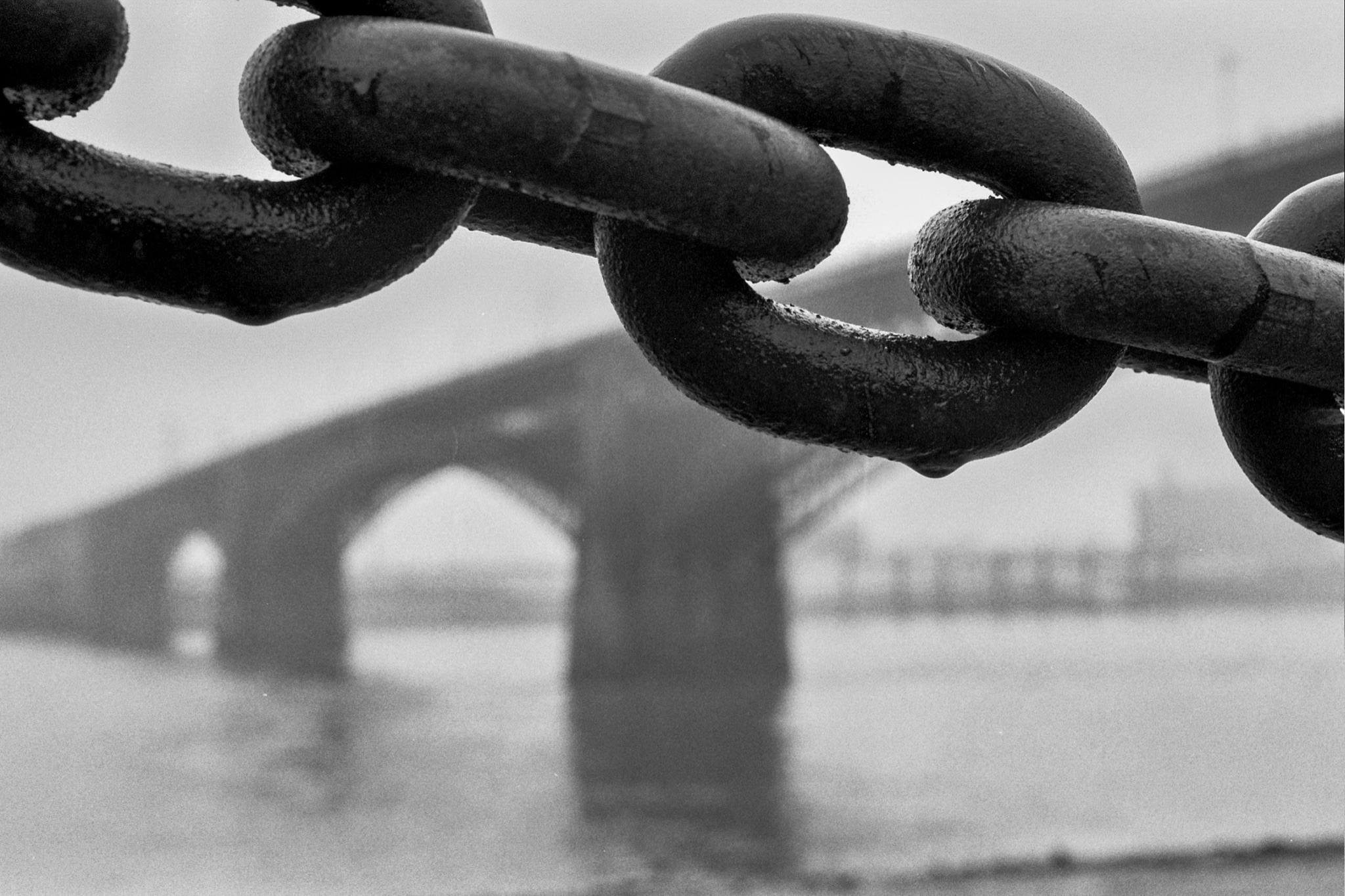
This image was part of my solo 2012 exhibition Nostalgia at 10th Street Gallery in downtown St. Louis. It is a visual representation of a paradoxical story of horror and safety experienced by my then-five-year-old boy—my grandfather, Floyd Coleman.
Growing up, he often recounted a story of being displaced to a place of refuge in a downtown St. Louis building, where rats would emerge and he would try to play with them. What preceded this moment was a harrowing journey: he and his family fleeing East St. Louis and walking across the Eads Bridge. He recalled his mother carrying him in her arms, with a cold gun pressed against his skin and hidden beneath “his” dress—reflecting a period over 100 years ago when boys wore dresses until reaching school age. Despite the chaos surrounding him, he recalled feeling safe and after that not having much fear of anything.
What he was recounting was his family fleeing the 1917 East St. Louis Massacre. Over three days, from July 2nd to July 5th, some estimates place as many as 200 African Americans being shot, hanged, beaten, or burned alive after being forced back into their homes or buildings. More than 6,000 African Americans—over half of the city’s Black population—fled East St. Louis. My grandfather and his family was amongst them.
In the photograph, the steel chains represent my great-grandmother’s gun, the tiny drop of water signifies pain, and the Eads Bridge fading into the east pays homage to my family’s story of tenacity and courage.
This image honors his memory of resilience and the protective presence of his mother amid unimaginable danger.
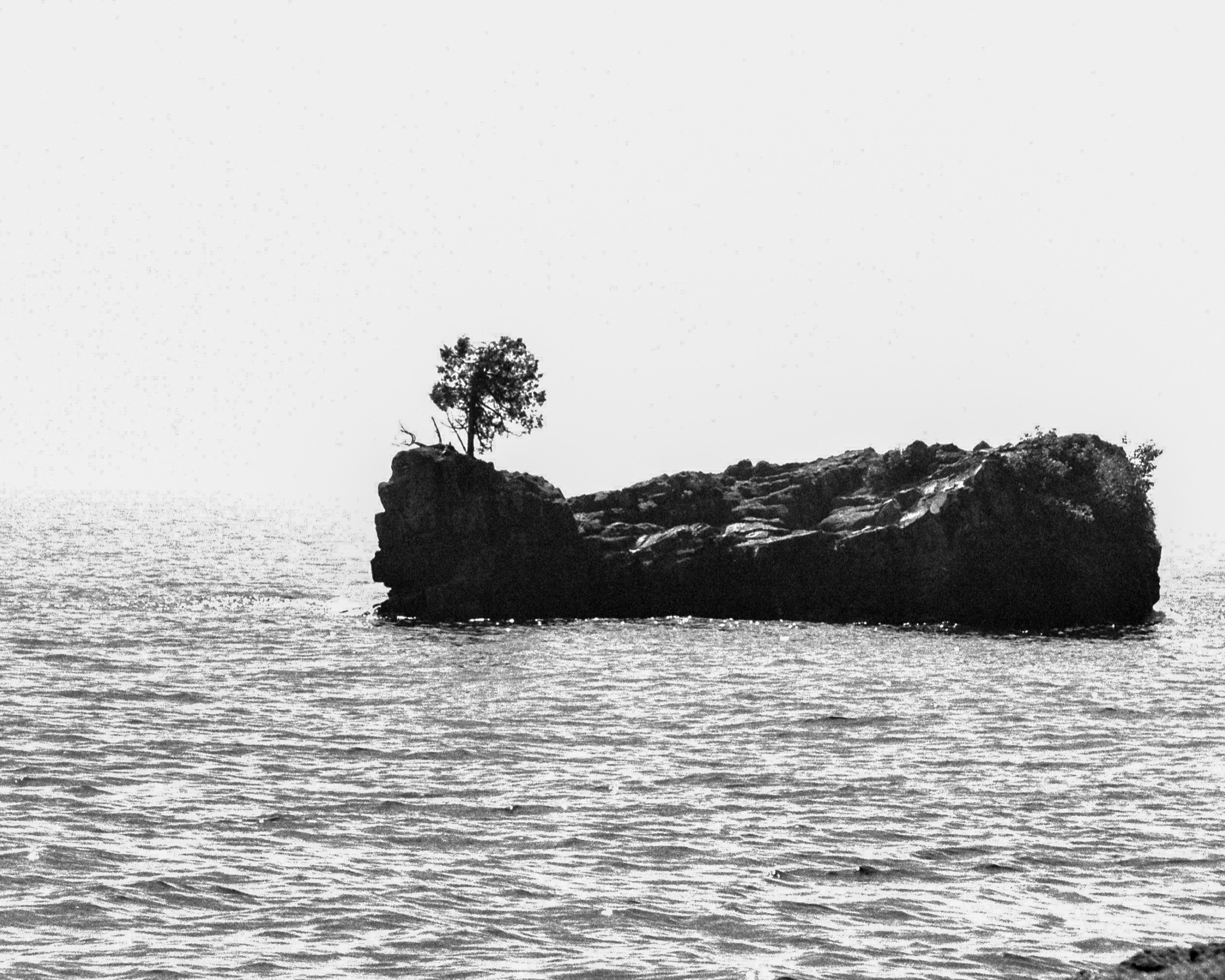
The Gift was photographed along the coastline between Duluth and Grand Portage, where a small rocky island rises quietly from the water. I named the image for two distinct reasons. The first is visual and symbolic: a single tree grows from the center of what appears to be a clenched rocky fist, a form that felt to me like a divine gesture — a reminder that life persists even in the most unlikely places.
The second reason is deeply personal. The experience of traveling this stretch of coastline with my uncle and his partner was itself a gift — one that came early in my photographic journey. That trip introduced me to a serene and expansive part of the country I had never seen before, shaping both my creative perspective and my appreciation for stillness and reflection.
This photograph holds both meanings at once: a quiet miracle in the landscape and a lasting memory of presence, generosity, and discovery.
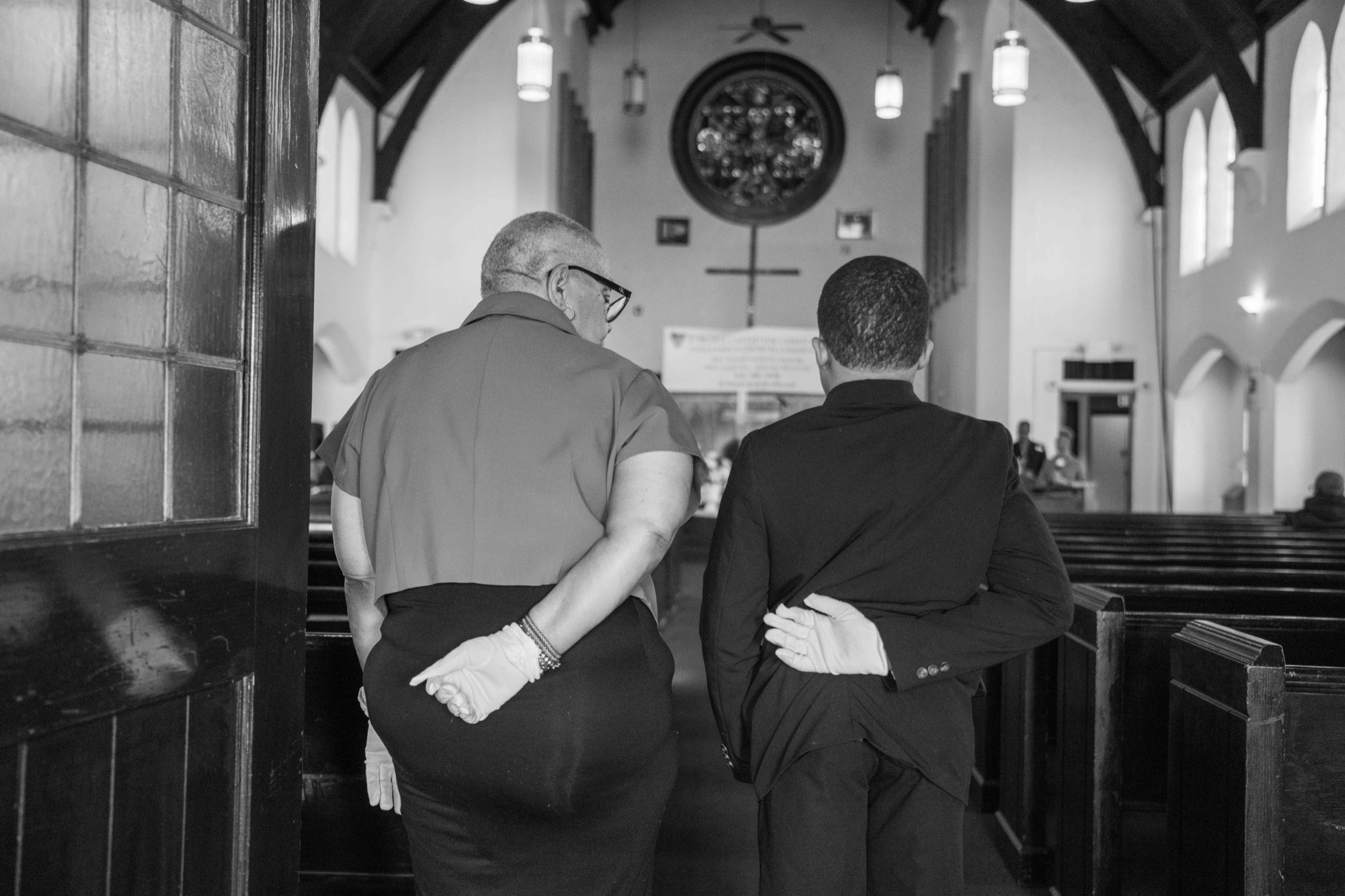
On January 5, 2025, I had the distinct honor of photographing a church service at United Church of Christ in Jennings, Missouri. From the moment I entered the sanctuary doors, I felt genuinely welcomed. When I shared that I was there to photograph Sister Hood, I was given extra special attention—a personal tour and a brief history of the church. I asked if it would be alright to capture imagery for my Sundays in St. Louis book, and I was graciously given permission to tell the story of their service. The service began with all attendees forming a prayer circle in the sanctuary. Just before it started, I noticed a woman standing toward the rear of the church, quietly giving instructions to a young boy. She handed him a pair of white gloves, gently took his right arm, and guided his hand toward the small of his back. The boy briefly touched the center of his brow, as if adjusting imaginary glasses. I moved behind them to position myself for a rear-facing photograph—one that would include both the pair and the beauty of the sanctuary. The woman, whom I later learned was his grandmother, leaned in and offered a few words of encouragement. Click. That moment resonated deeply with me. I connected with the young usher in several ways. As a child, I too wore white gloves and participated in church processions—though instead of being an usher, I was an altar boy. The first time I was asked to serve, I was incredibly nervous, but the quiet reassurance of the pastor’s assistant helped settle me. I also often attended church with my grandmother. I remember her insistence on dressing well and practicing proper etiquette during the service, always sweetened by the promise of butterscotch or peppermint candy if I behaved. Church, in my youth, was very much a training ground—preparing me for adulthood and for how to carry myself in public, among others.